
 Niti Post
|
-
December 12, 2022
Niti Post
|
-
December 12, 2022
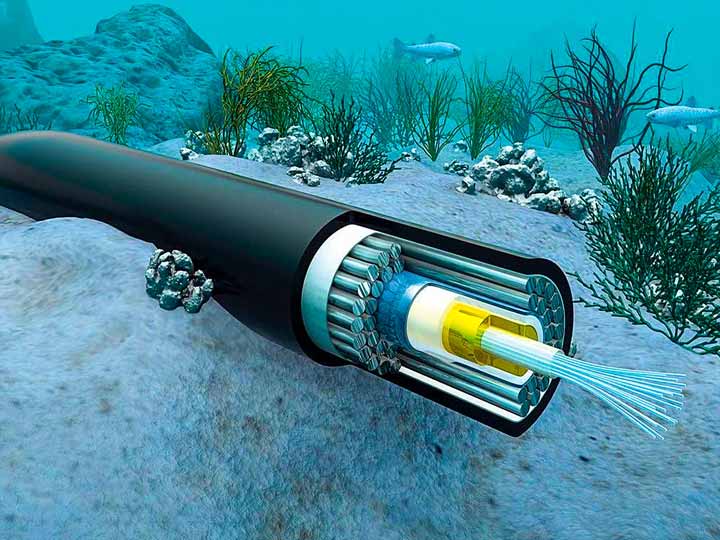
Bharti Airtel recently entered into a partnership with Meta to develop undersea cable infrastructure which will assist in supporting high-speed internet in the country and boost data-carrying capacities between geographies. With this, both the firms, along with Saudi Telecommunication Company, will bring the world’s longest subsea cable system 2Africa Pearls to India, at Airtel’s landing station in Mumbai.
Besides this, Airtel and Meta have also collaborated on Open RAN (radio access network) technologies. The company is conducting trials for 4G and 5G Open RAN solutions on selective sites in Haryana and is expected to begin deploying the solutions commercially over the next few quarters.
2Africa Pearls
When the 37,000-km subsea cable system ‘2Africa Pearls’ was launched in 2020, it connected 23 countries. The cable system later got extended to connect a total of 33 countries across Africa, Europe, and Asia. Under the new agreement, Airtel and Meta will extend the cable to Airtel’s landing station in Mumbai and also pick up dedicated capacity to further strengthen its submarine network portfolio. “The 2Africa cable will significantly boost India’s cable capacity and empower global hyper-scalers (that operate data centres) and businesses to build new integrated solutions and provide a high-quality seamless experience to customers,” Airtel said in a release.
Need to strengthen Undersea Cables network
The world is rapidly moving towards more and more digitised state of lifestyle. Fast growing Internet requirements and consumption are becoming prime focus of the telecom industry globally, pooling in more and more investments in this domain from telecom and tech giants across the world. Since 95% of international internet data including cloud and digital communication are transmitted through undersea fibre-optic cables, it is necessary for India to develop a strong submarine cable network as part of its critical national infrastructure.
Why India needs to become a bigger player in the domain
Undersea cables sector has become one of the key sectors shaping the global economy. The Indo-Pacific region in fact, is home to the fastest growing undersea communication cable networks. This makes it imperative for India to engage in project and international collaborations when it comes to subsea cable infrastructure expansion.
Satellite communication is undoubtedly playing key role in increasing connectivity in remote areas. However, deep sea cable connectivity will continue to be the chief driver of internet growth, because of the affordability and bandwidth advantages. Worldwide, major undersea cables that dominate the sector are – U.S.-based SubCom, Japan’s NEC & ‘Alcatel Submarine Networks’ headquartered in France. These are known as top suppliers of optical cables across the globe. China’s ‘HMN Technologies’ is also fast-emerging as another decent player. If reports are to be believed, China aims to capture a large market chunk of fibre-optic communications market by 2025. The ambitions also share linkages with its various global plans – Digital Silk Road, and Belt and Road, Made in China 2025 and China Standards 2035, etc. This could also be the reason behind China’s acquisition of U.K.’s Global Marine, which is now Huawei Marine Networks. Chinese companies have also built/ repaired almost a quarter of the world’s estimated 400 submarine cables. A close collaboration between India and Japan can help in countering China’s focus on undersea cables. There is already a high density of undersea cable networks in the South China Sea and the Indo-Pacific, areas of mutual strategic interest. Thus, a lost stake and non-involvement in the domain (subea cable infrastructure) would mean strategic and geopolitical implications.
Other recent projects taken by Indian companies
Earlier in February, Airtel had become a part of the SEA-ME-WE-6 undersea cable consortium that aims to connect France and Singapore. The firm is set to invest 20% of the total investment in the cable system, which will go live in 2025. The telecom operator has acquired one fiber pair on the main SEA-ME-WE-6 system and will co-build four fiber pairs between Singapore, Chennai and Mumbai.
Reliance Jio too has been expanding its foothold in the underwater cable infrastructure. It is going to land the next generation multi-terabit India-Asia-Xpress (IAX) undersea cable system in Hulhumale, Maldives, connecting it with world’s major internet hubs in India and Singapore. This IAX cable system will start from western Mumbai and will directly be connected to Singapore, with landing stations in India, Thailand & Malaysia. The project is expected to be ready for service by the end of 2023. Besides, India is also exploring with Saudi Arabia the possibilities of engaging in cross-country project borne on the tide of a new era of energy diplomacy. The two countries reportedly have been exploring the idea of linking the Gujarat coast to the Middle East with deep sea cables.
Submarine cable connectivity to Andaman & Nicobar Islands (CANI)
PM Narendra Modi had launched the submarine Optical Fibre Cable (OFC) connecting Andaman &Nicobar Islands to the mainland in the year 2020. The Prime Minister had admired the laying of cables for about 2300 kilometers under the sea as surveying in the deep sea, maintaining the cable quality and laying of the cable with specialised vessels is a difficult task. The project also had to overcome challenges such as high waves, storms and monsoons and the tough times owing to Corona Pandemic.




Related Items
Tata Power to set up 100 MW battery energy storage system in Mumbai
India Seeks Expedited S-400 Missile System Deliveries From Russia