

 Niti Post
|
-
March 13, 2023
Niti Post
|
-
March 13, 2023
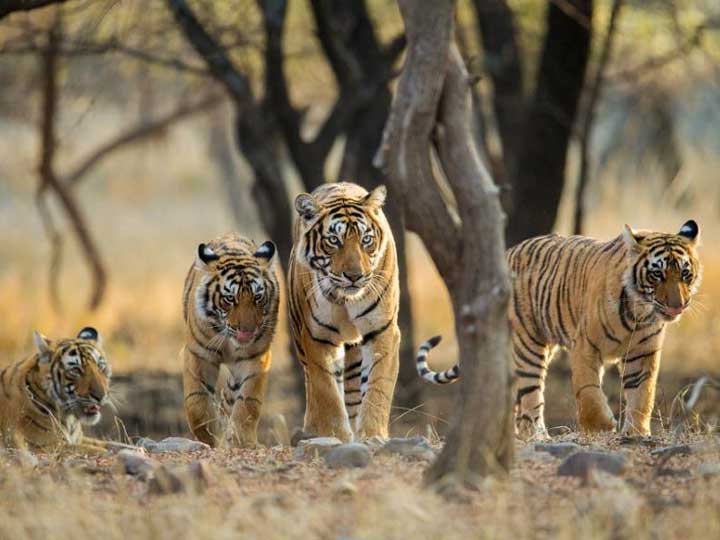
Pertinently, one of the oldest national parks in Madhya Pradesh, Madhav National Park, was once home to a substantial population of tigers. However, over time, the tiger population has fallen drastically, with the last reported sighting being in 2012. In a noteworthy development, the Madhya Pradesh Forest Department relocated a male tiger, aged four years and previously from Satpura Tiger Reserve, and a female tigress, aged three-and-a-half years and formerly from Bandhavgarh Tiger Reserves. Both have been placed in custom-built soft release enclosures in Madhav National Park.
A Plan for the Reintroduction of Tigers
As part of a proposal to re-establish the tiger population in Madhav National Park, the Madhya Pradesh Forest Department prepared a plan to translocate five tigers (two males and three females) from Bandhavgarh Tiger Reserve, Panna Tiger Reserves, and the surrounding areas of Bhopal. To accommodate these tigers, the forest department constructed three enclosures of 1.3 hectares each, which are interconnected through gates, providing water, shade, and natural tree cover. The newly introduced tigers will be monitored around the clock by the field staff, and a full-time veterinary doctor has been deployed at the national park for tiger monitoring.
Promoting Wildlife Conservation and Tourism
Union Minister for Environment, Forest and Climate Change, Bhupender Yadav, took to Twitter to share the news of the reintroduction of tigers in Madhav National Park, highlighting the government’s focus on wildlife conservation and promoting tourism-related livelihood opportunities for local communities under Prime Minister Narendra Modi.
The reintroduction of tigers in Madhav National Park is a significant step towards the conservation of wildlife and the preservation of India’s natural heritage. It is an encouraging development for tiger conservation efforts in the region and will contribute to the promotion of sustainable tourism in the area.
A Conservation Significance
Madhav National Park is spread over an area of 354.61 square kilometers, and its location assumes conservation significance as it has the potential to connect Panna Tiger Reserve of Madhya Pradesh with Ranthambore Tiger Reserve in Rajasthan. The reintroduction of tigers in the national park will be a major boost for wildlife conservation in the region.





Related Items
Vande Mataram Bill passed in Rajya Sabha
National security is a collective duty of citizens: NSA Ajit Doval
'India getting utmost respect for its independent foreign policy, prioritisation of national interests'