

 Niti Post
|
-
February 22, 2023
Niti Post
|
-
February 22, 2023
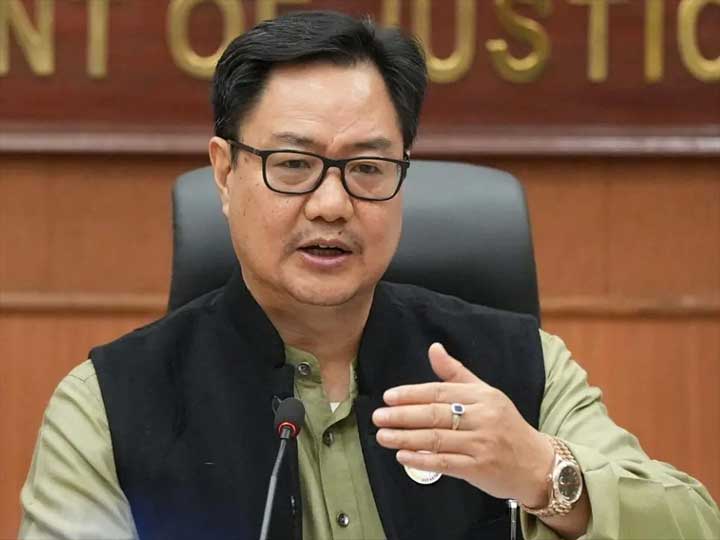
The Union Cabinet, chaired by Prime Minister Narendra Modi, approved the extension of the term of the 22nd Law Commission of India up to August 31, 2024.
Notably, the 22nd Law Commission was constituted after 4 years. On November 7, 2022, the Central Government appointed Justice Rituraj Awasthi, retired High Court Chief Justice of Karnataka, as chairperson of the 22nd Law Commission, along with five other members.
The Chairperson and Members of the Commission have joined office recently and took up several pending projects for examination and report, which are works in progress. Therefore, as per the Cabinet decision, the tenure of the 22nd Law Commission has been extended up to August 31, 2024. It will consist of the same composition, which is as follows:
(a) a full-time Chairperson
(b) four full-time Members (including Member-Secretary)
(c) Secretary, Department of Legal Affairs as ex-officio Member
(d) Secretary, Legislative Department as ex officio Member
(e) Not more than five part-time Members
Law Commission of India
The Law Commission of India is a non-statutory body, constituted by the Government of India from time to time. The Commission was originally constituted in 1955 and is reconstituted from time to time. The tenure of the present Law Commission of India ends on February 20, 2023.
The various Law Commissions have been able to make important contributions towards the progressive development and codification of Law of the country. The Law Commission has so far submitted 277 Reports.
Objectives
The main function of the Commission is to research and advise the Government of India on legislative matters and its reforms. It consists of legal experts and is headed by a retired judge. The Commission is constituted for a fixed tenure and serves as an advisory body to the Ministry of Law and Justice. The Law Commission has played the key role of both advisory and is critical of the Government’s policies. The Law Commission during its extended term shall continue to discharge its existing responsibilities, as bestowed upon it by order dated February 21, 2020, which, among other things, includes:
(a) identification of laws that are no longer relevant and recommendations for the repeal of obsolete and unnecessary enactments
(b) suggesting the enactment of new legislation as may be necessary to implement the Directive Principles and attain the objectives set out in the Preamble of the Constitution
(c) Considering and conveying to the Government its views on any subject relating to law and judicial administration that may be specifically referred to it by the Government through Ministry of Law and Justice (Department of Legal Affairs)
(d) Considering the requests for providing research to any foreign countries as may be referred to it by the Government through Ministry of Law & Justice (Department of Legal Affairs)
(e) preparing and submitting to the Central Government, from time to time, reports on all issues, matters, studies and research undertaken by it and recommending, based on such reports for effective measures to be taken by the Union or any State
(f) performing such other functions as may be assigned to it by the Central Government from time to time





Related Items
India and UAE continue to add momentum to high level exchanges
India targets 600 MT steel capacity by 2047, new policy soon: Secretary
'Saffron holds deep significance with Tricolour': Hockey India on WC jersey row