
 Dr Atul Gautam
|
-
March 31, 2026
Dr Atul Gautam
|
-
March 31, 2026
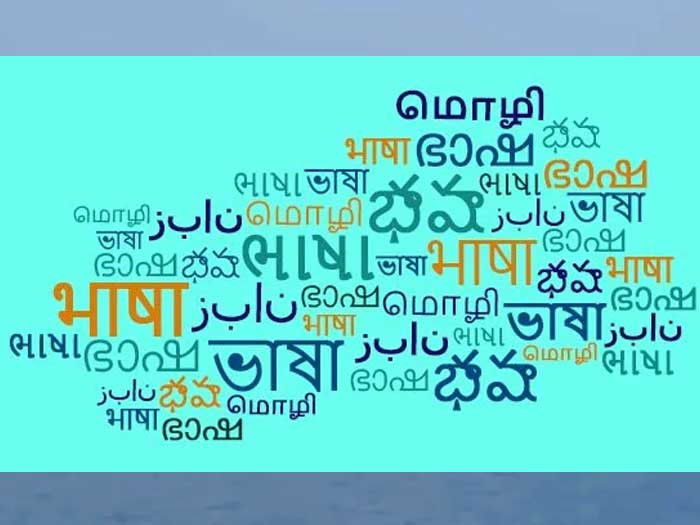
As a new academic session approaches, many parents begin the important task of choosing the right school for their children. Increasingly, one of the first questions asked is whether the school is an English-medium institution. English proficiency is often associated with opportunity and global mobility. However, an equally important question deserves attention: in which language does a child first learn to think, feel, and understand the world?
The National Education Policy 2020 recognises a simple but powerful truth: children learn best in their mother tongue during the foundational years of education. This insight is not merely cultural; it is supported by decades of cognitive and educational research.
The Cognitive Power of the Mother Tongue
A mother tongue is not simply the first language a child hears. It is the language through which emotions are first expressed, relationships are first understood, and curiosity first takes shape. When a child learns the language spoken at home, comprehension becomes natural rather than mechanical.
Concepts in mathematics, science, and social understanding become clearer when they are introduced through familiar linguistic structures. Learning in a foreign language at the earliest stage can sometimes turn education into memorisation rather than understanding.
The wisdom behind the NEP 2020 lies in recognising that strong foundations in the mother tongue actually strengthen a child’s ability to learn additional languages later, including English. A child who thinks clearly in one language can transfer that clarity to others.
Rethinking the English-Medium Aspiration
English undoubtedly remains an important global language. It connects students of Bharat to international scholarship, technology, and professional networks. However, the assumption that English must replace the mother tongue in early education deserves careful reconsideration.
A healthy educational model does not reject English; rather, it introduces it at the appropriate stage while preserving cognitive grounding in the mother tongue. This balanced approach allows children to grow intellectually rooted and globally capable at the same time.
Parents choosing schools today may therefore look beyond the label of “English medium” and ask a deeper question: Does the school respect and nurture the child’s linguistic foundation?
The Civilizational Role of Sanskrit
Within this larger linguistic landscape of Bharat, Sanskrit occupies a unique place. It is not merely an ancient language preserved in manuscripts; it is a profound intellectual reservoir that has shaped philosophy, science, literature, grammar, and spiritual thought for millennia.
Sanskrit has influenced a vast range of languages across Bharat, from Hindi and Marathi to Kannada, Bengali, Assamese, and many others. Even languages that developed along different historical paths have drawn on Sanskrit vocabulary and concepts at various points.
For this reason, Sanskrit may be understood as a civilizational connector rather than a language of hierarchy. It provides a shared linguistic heritage that links diverse regions and traditions of Bharat.
The remarkable phonetic precision of Sanskrit also makes it uniquely suited for structured language learning. Exposure to Sanskrit—especially in later school years—can deepen students’ understanding of linguistic patterns, etymology, and classical knowledge traditions.
The Plural Language Fabric of Bharat
Bharat’s linguistic richness has always been plural. Hindi, Tamil, Telugu, Bengali, Kannada, Malayalam, Marathi, Punjabi, Assamese, and numerous tribal and regional languages together form a vibrant cultural ecosystem.
Historically, Sanskrit, Prakrit, Persian, and many regional speech forms interacted dynamically, shaping literary and cultural traditions across centuries. This layered heritage shows that Bharat’s strength lies not in linguistic uniformity but in harmonious diversity.
In such a framework, each language plays a meaningful role:
• Mother tongue nurtures emotional and cognitive development
• Regional and national languages enable social and cultural connectivity
• Sanskrit preserves and connects the civilizational intellectual tradition of Bharat
• English and other global languages open international horizons
A Balanced Path for Education
The challenge for modern education is not to choose one language over another but to create a balanced linguistic ecosystem.
Children grounded in their mother tongue grow with stronger conceptual clarity and cultural confidence. Exposure to Sanskrit can connect them with the intellectual heritage of Bharat. Learning English equips them for global participation.
Such a model does not diminish any language. Instead, it restores equilibrium between rootedness and global engagement.
A Thought for Parents
As parents explore schools for the coming academic session, the decision need not be guided solely by the prestige of English-medium instruction. The deeper question is whether a school supports the child’s natural linguistic development. Education is most meaningful when a child learns first in the language of home, gradually embraces other languages, and grows into a confident participant in both national and global conversations.
In this way, the mother tongue becomes not a limitation, but the strongest foundation for lifelong learning. And within that journey, Sanskrit continues to remind us of the deep intellectual continuity that binds the many voices of Bharat into a shared civilizational dialogue.
- Author is Assistant Professor at Jamia Millia Islamia



Related Items
India's first live heart transport by train completed on Vande Bharat
Security of RRTS 'Namo Bharat' corridor handed over to CISF
Healthcare, education, manufacturing sectors see nearly half of cyberattacks: Report