

 Niti Post
|
-
February 1, 2023
Niti Post
|
-
February 1, 2023
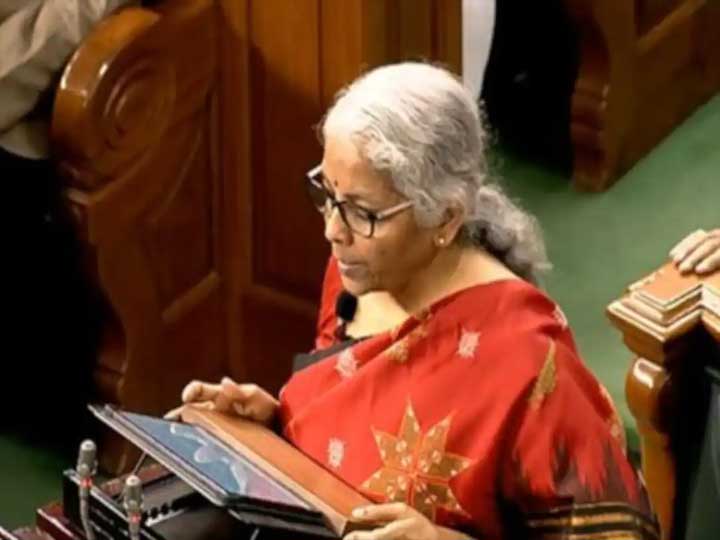
Walking a tight-rope between staying fiscally prudent and meeting public expectations of lower taxes, while at the same time firing the engines of the economy, union finance minister Nirmala Sitharaman on Wednesday unveiled the last full-year budget of the Narendra Modi government, as it seeks a third term in the 2024 Lok Sabha election. Taking into account the demands and concerns of the middle class, she made five major announcements relating to the personal income tax in the first budget of the ‘Amrit Kal’.
Rebate limit increased to ₹ 7 lakh
The rebate limit in the new tax regime has been increased to ₹ 7 lakh, meaning that the people in the new tax regime with income up to ₹ 7 lakh will not have to pay any tax. The tax structure in the new personal tax regime has been changed by reducing number of slabs to five and increasing the tax exemption limit to ₹ 3 lakh. This will provide major relief to all taxpayers in the new regime.
Benefit of standard deduction extended
The benefit of standard deduction has been extended to the salaried class and the pensioners including family pensioner under the new tax regime. Salaried individual will get standard deduction of ₹ 50,000 and pensioner ₹ 15,000 as per the proposal. Each salaried person with an income of ₹ 15.5 lakh or more will thus gain ₹ 52,500, from the above proposals.
Highest surcharge rate in income tax reduced
The highest surcharge rate in personal income tax has been reduced from 37% to 25% in the new tax regime for income above ₹2 crore. This would result in maximum tax rate of personal income tax come down to 39% which was earlier 42.74%. The limit of tax exemption on leave encashment on retirement of non-government salaried employees has been increased from ₹3 lakh to ₹25 lakh. The new income tax regime has been made the default tax regime. However, the citizens will continue to have the option to avail the benefit of the old tax regime.
Priorities of this budget
Sitharaman listed seven priorities of the union budget and said that they complement each other and act as the ‘Saptarishi’ guiding us through the Amrit Kaal. They are – inclusive development, reaching the last mile, infrastructure and investment, unleashing the potential, green growth, youth power and financial sector.
Digital public infrastructure for agriculture
The Minister said that the Digital Public infrastructure for agriculture will be built as an open source, open standard and inter operable public good. She said, this will enable inclusive, farmer-centric solutions through relevant information services for crop planning and health, improved access to farm inputs, credit, and insurance, help for crop estimation, market intelligence, and support for growth of agri-tech industry and start-ups.
Agriculture accelerator fund
The FM announced that an Agriculture Accelerator Fund will be set-up to encourage agri-startups by young entrepreneurs in rural areas, which will aim at bringing innovative and affordable solutions for challenges faced by farmers. It will also bring in modern technologies to transform agricultural practices, increase productivity and profitability.
Agriculture Credit
Dwelling on welfare measures for farmers, the Finance Minister announced that the agriculture credit target will be increased to Rs 20 lakh crore with focus on animal husbandry, dairy and fisheries. She informed that the government will launch a new sub-scheme of PM Matsya Sampada Yojana with targeted investment of Rs 6,000 crore to further enable activities of fishermen, fish vendors, and micro & small enterprises, improve value chain efficiencies, and expand the market. For farmers, especially small and marginal farmers, and other marginalized sections, the government is promoting cooperative-based economic development model. To realise this vision, the government has already initiated computerization of 63,000 Primary Agricultural Credit Societies (PACS) with an investment of Rs 2,516 crore.
Medical & nursing colleges
The Finance Minister announced that one hundred and fifty-seven new nursing colleges will be established in co-location with the existing 157 medical colleges established since 2014. She also informed that a Mission to eliminate Sickle Cell Anaemia by 2047 will be launched, which will entail awareness creation, universal screening of 7 crore people in the age group of 0-40 years in affected tribal areas, and counseling through collaborative efforts of central ministries and state governments. On medical research, she said that facilities in select ICMR labs will be made available for research by public and private medical college faculty and private sector R&D teams for encouraging collaborative research and innovation.
Teachers’ Training
She said that teachers’ training will be re-envisioned through innovative pedagogy, curriculum transaction, continuous professional development, dipstick surveys, and ICT implementation. She added that the District Institutes of Education and Training will be developed as vibrant institutes of excellence for this purpose. She also informed that a National Digital Library for Children and Adolescents will be set-up for facilitating availability of quality books across geographies, languages, genres and levels, and device agnostic accessibility. States will be encouraged to set up physical libraries for them at panchayat and ward levels and provide infrastructure for accessing the National Digital Library resources.
Pradhan Mantri PVTG development mission
To improve socio-economic conditions of the particularly vulnerable tribal groups (PVTGs), Pradhan Mantri PVTG Development Mission will be launched. This will saturate PVTG families and habitations with basic facilities such as safe housing, clean drinking water and sanitation, improved access to education, health and nutrition, road and telecom connectivity, and sustainable livelihood opportunities. An amount of Rs 15,000 crore will be made available to implement the Mission in the next three years. The Centre will recruit 38,800 teachers and support staff for the 740 Eklavya Model Residential Schools, serving 3.5 lakh tribal students.
Infrastructure & Investment
Sitharaman said, investments in Infrastructure and productive capacity have a large multiplier impact on growth and employment and in view of this capital investment outlay, is being increased steeply for the third year in a row by 33 per cent to Rs 10 lakh crore, which would be 3.3 per cent of GDP. She said that this will be almost three times the outlay in 2019-20. The ‘Effective Capital Expenditure’ of the Centre is budgeted at Rs 13.7 lakh crore, which will be 4.5 per cent of GDP.
Railways
The Finance Minister announced that a capital outlay of Rs 2.40 lakh crore has been provided for the Railways, which is the highest ever outlay and about 9 times the outlay made in 2013- 14. She also informed that one hundred critical transport infrastructure projects, for last and first mile connectivity for ports, coal, steel, fertilizer, and food grains sectors have been identified and they will be taken up on priority with investment of Rs 75,000 crore, including Rs 15,000 crore from private sources. Sitharaman said that fifty additional airports, heliports, water aerodromes and advance landing grounds will be revived for improving regional air connectivity.
Urban Infrastructure Development Fund
She announced that an Urban Infrastructure Development Fund (UIDF) will be established through use of priority sector lending shortfall, which will be managed by the National Housing Bank, and will be used by public agencies to create urban infrastructure in Tier 2 and Tier 3 cities. She said that states will be encouraged to leverage resources from the grants of the 15th Finance Commission, as well as existing schemes, to adopt appropriate user charges while accessing the UIDF. Government will make available Rs 10,000 crore per annum for this purpose.
Centres of Excellence for Artificial Intelligence
For realizing the vision of “Make A-I in India and Make A-I work for India”, three centers of excellence for Artificial Intelligence will be set-up in top educational institutions. Leading industry players will partner in conducting interdisciplinary research, develop cutting-edge applications and scalable problem solutions in the areas of agriculture, health, and sustainable cities, which will galvanize an effective A-I ecosystem and nurture quality human resources in the field.
National Data Governance Policy
To unleash innovation and research by start-ups and academia, a National Data Governance Policy will be brought out, which will enable access to anonymized data. She also announced that An Entity DigiLocker will be set up for use by MSMEs, large business and charitable trusts for storing and sharing documents online securely, whenever needed, with various authorities, regulators, banks and other business entities.On 5G Services, she announced that one hundred labs for developing applications using 5G services will be set up in engineering institutions to realize a new range of opportunities, business models, and employment potential. The labs will cover, among others, applications such as smart classrooms, precision farming, intelligent transport systems, and health care applications.
Green Growth
India is moving forward firmly for the ‘panchamrit’ and net-zero carbon emission by 2070 to usher in green industrial and economic transition. She said, this Budget builds on the focus on green growth. The recently launched National Green Hydrogen Mission, with an outlay of Rs 19,700 crores, will facilitate transition of the economy to low carbon intensity, reduce dependence on fossil fuel imports, and make the country assume technology and market leadership in this sunrise sector. The target is to reach an annual production of 5 MMT by 2030. The Budget also provides Rs35,000 crore for priority capital investments towards energy transition and net zero objectives, and energy security by Ministry of Petroleum & Natural Gas
Focus on youth power
To empower the youth and help the ‘Amrit Peedhi’ realize their dreams, government has formulated the National Education Policy, focused on skilling, adopted economic policies that facilitate job creation at scale, and have supported business opportunities. She also announced that Pradhan Mantri Kaushal Vikas Yojana 4.0 will be launched to skill lakhs of youth within the next three years. On-job training, industry partnership, and alignment of courses with needs of industry will be emphasized. The scheme will also cover new age courses for Industry 4.0 like coding, AI, robotics, mechatronics, IOT, 3D printing, drones, and soft skills.
Credit Guarantee for MSMEs
The Finance Minster has proposed revamping of the credit guarantee scheme for MSMEs and announced happily that the revamped scheme will take effect from 1st April 2023 through infusion of Rs 9,000 crore in the corpus. This will enable additional collateral-free guaranteed credit of Rs 2 lakh crore. Further, the cost of the credit will be reduced by about 1 per cent. A National Financial Information Registry will be set up to serve as the central repository of financial and ancillary information. This will facilitate efficient flow of credit, promote financial inclusion, and foster financial stability. A new legislative framework will govern this credit public infrastructure and be designed in consultation with the RBI.
Common IT Return Form
The Union Budget also proposes to roll out a next-generation common IT return form for tax payer convenience. It also stipulates a plan to strengthen the grievance redressal mechanism for direct taxes. The Finance Minister also announced deployment of about 100 Joint Commissioners for disposals of small appeals in direct tax matters. She also said that the department will be more selective in taking up cases for scrutiny of returns already received this year.



Related Items
CM Rekha Gupta vows mega infra push on eve of presenting her 2nd Delhi Budget
Income-tax rules 2026 notified: Govt tightens compliance, makes filing simpler
Uttarakhand Budget prioritises inclusive growth, development: CM Dhami