
 Niti Post
|
-
December 31, 2022
Niti Post
|
-
December 31, 2022
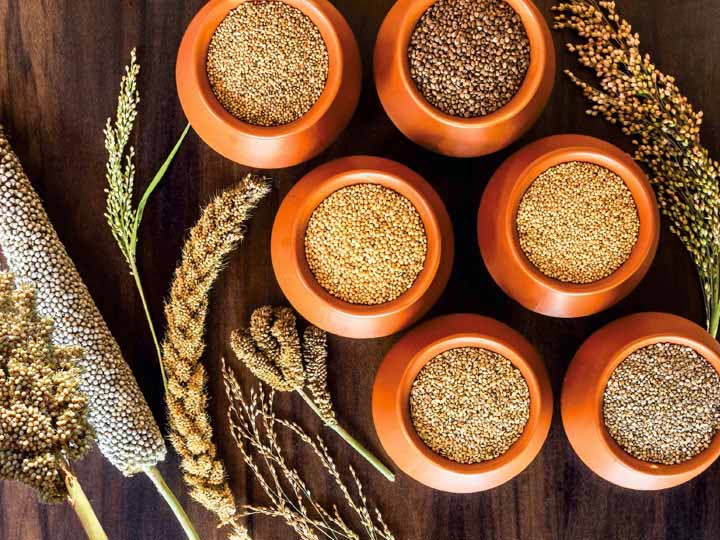
As a pre-preparation to celebrate the IYOM, Union Agriculture Minister Narendra Singh Tomar organised a ‘Sahbhoj’ with dishes prepared from nutritious cereals like Millets (Jowar, Bajra, Ragi) at his residence on 22 December 2022.
Local vendors from native villages of Rajasthan were called at the residence of the Minister to make food and showcase the multi-cuisine recipes made from different types of millet.
Millets, the super crop, have been an integral part of India’s diet for centuries. In addition to being the powerhouse of health benefits, they are also good for the environment with low water input requirement. With the initiative of India and support from more than 70 nations across the globe, the United Nations General Assembly has declared the year 2023 ‘International Year of Millets’.
IYOM 2023 will be celebrated across the globe to provide an opportunity to increase global production, efficient processing and better use of crop rotation and promotion of millets as a major component of the food basket.
Speaking to PBNS, a local vendor present at the Sahbhoj event exhorted the relevance of celebrating a whole year dedicated to millets. “Millets have been a part of our local diet for as long as we can remember, even before the year has started they are being talked about everywhere. Their commercialization has spiked in recent years, now we can make cake, chocolates, and so many different varieties /dishes out of them,” he said.
With the help of local FPOs and the government’s initiative, small farmers and farm producers will be able to sell these millet-based products domestically and worldwide.
How will IYOM help farmers?
Often referred to as ‘a poor man’s food’, millet was one of the first crops to be domesticated for food and has been hailed as the ‘right crop’ for rainfed agriculture. Considered a native crop of India, millets contribute largely to the food and nutritional security of the country.
Millets have a shorter growing duration as they complete their life cycle in 2-4 months. They fit a wide range of cropping systems and also adapt themselves to changing environmental conditions, especially during the vagaries of monsoons. Often referred to as famine crops, millets are the only crops which provide assured yields in famine situations. They are climate resilient and drought resistant.
A bloop in their image, millets are also referred to as “Orphan Crops” and are considered to be the last option for cultivation as they have less demand in the market and profits earned are also lower than other crops.
However, the tide is now turning in favour of millets, the Super Crop. With the International Year of Millets, we can expect growth for Indian millets, recipes, and value-added products to be accepted globally. In an event organised to promote millets, Secretary, of Agriculture and Farmers Welfare Manoj Ahuja said that the pandemic has highlighted the need to augment ways that can increase the income of small and marginal farmers and millet can be one of the best options for the same.
Prime Minister Narendra Modi shared his vision to make IYM 2023 a ‘People’s Movement’ alongside positioning India as the ‘Global Hub for Millets’. The Climate friendly crop millet could become a boon for farmers to generate more revenue as its commercial value would rise during the year-long celebrations and beyond.
The Department of Agriculture & Farmers Welfare aims to promote the cultivation and consumption of Millet at a larger scale and bring it to the entire globe. In this backdrop, the institutional mechanisms can encourage the production of millet and make it profitable via policy initiatives for businesses as well.
Millets Promotion – Government Collaboration with Ministries & Startups
The Agriculture Ministry is working in mission mode to increase millet production and consumption in collaboration with other Central Ministries, all State Governments and other stakeholder organizations.
A sub-mission on National Food Security Mission – Nutri Cereals has been implemented considering the high-nutritive value, potential for economic empowerment of small & marginal farmers and contribution in maintaining the earth’s biodiversity. In April 2018, Millets were rebranded as “Nutri Cereals”, and the year 2018 was declared as the National Year of Millets, aiming at larger promotion and demand generation.
The Government of India recognises that Public Distribution System needs to shift its focus of distribution programs from basic calories to providing a more diverse food basket that should include millet to improve the nutritional status of preschool children and women of reproductive age.
Millets have been included under the Poshan Mission campaign and are also being implemented in 212 districts of 14 States under the National Food Security Mission (NFMS).
Millets & Startups – A Partnership to promote health
India has more than 500 startups working in the millet value-added chain, while the Indian Institute of Millets Research has incubated 250 startups under RKVY-Raftar.
The government of India is providing support to Start-up entrepreneurs for recipes and value-added products to promote the consumption of millet. In a pre-celebration event for IYOM, the Agriculture Minister informed that more than 66 Startups have been given more than Rs.6.25 crore, while 25 Startups have been approved for further funding.
The Minister informed that NITI Aayog and the World Food Program are going to identify and solve the challenges in a systematic and effective manner. This partnership intends to focus on mainstreaming millets and support India in taking the lead globally in knowledge exchange using the opportunities in the form of the International Year of Millets.
Millet is a storehouse of micronutrients, vitamins and minerals. IYoM under the auspicious tenure of India’s G20 presidency is set to raise awareness about the contribution of millets for Food Security and Nutrition, motivate stakeholders for continuous production and quality improvement of millets. The year will attract attention to increase investment in research and development services for the growth of the Super Crop.


Related Items
PM Modi to inaugurate Noida International Airport today
Gender cannot trump biology: World Athletics supports IOC's policy
Gujarat launches 100-day campaign ahead of International Yoga Day